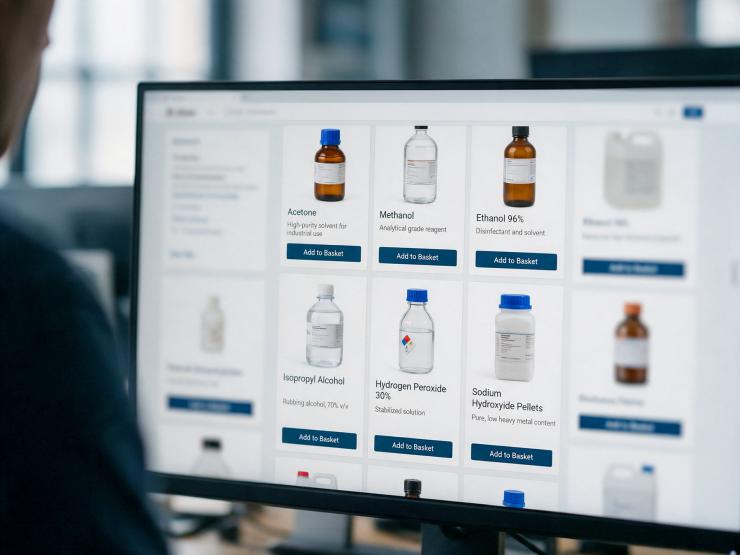
ECHA Inspections Highlight Gaps in Hazard Information & Restricted Substances
ECHA’s latest enforcement findings highlight the importance of checking both the information presented to online customers and the chemical compliance of the products being sold.
In a news release dated 24 November 2026, ECHA reported that inspectors in 27 European Economic Area (EEA) countries checked 5,281 products sold through online platforms and web shops. The inspections covered substances, mixtures and articles, examining requirements under the REACH, Classification, Labelling and Packaging (CLP), and Persistent Organic Pollutants (POPs) Regulations.
Overall, 61% of the products or online offers checked failed to comply with at least one of the requirements inspected.
That figure needs context. Inspectors used a risk-based approach, targeting products where non-compliance was considered likely. The results therefore do not represent the overall level of compliance across all products sold online in the EEA. They do, however, highlight recurring issues that businesses should consider when reviewing their own products and online sales activities.
Missing Hazard Information in Online Promotion of Chemicals
Of the 2,206 substances and mixtures checked for the obligation to provide hazard information in online advertisements, 62% did not include the required information.
For businesses selling chemicals online, this finding reinforces the importance of treating online product information as part of the compliance process. Product listings need appropriate regulatory review alongside physical labels and supporting documentation
A practical starting point is to check whether the hazard information required for each online offer is present, accurate and consistent with the product’s classification. Businesses should also consider how changes to product classifications and labels are carried through to their web shops and third-party platform listings.
Restricted Substances Remain a Concern Online
Inspectors checked 3,126 products for compliance with relevant REACH restrictions and found that 56% were non-compliant. Mixtures containing restricted substances accounted for most cases.
The highest non-compliance rate concerned restrictions on substances that are carcinogenic, mutagenic or toxic to reproduction in products intended for the general public, mainly involving lead and borates. Inspectors also identified problems involving lamp oils, certain perfluoroalkyl carboxylic acids (PFAS), phthalates, and cadmium, nickel and lead in jewellery.
Checks under the POPs Regulation found non-compliance in 14% of the products inspected under that legislation. These findings mainly involved restricted substances, including short-chain chlorinated paraffins and perfluorooctanoic acid (PFOA), above permitted limits.
For suppliers, these results underline the value of understanding product composition and obtaining sufficient evidence to assess applicable restrictions. Depending on the product and the reliability of available information, this may involve reviewing supplier declarations, technical documentation and targeted analytical testing.
Online Platforms & Chemical Supply Chain Oversight
Within the inspected sample, non-compliance was more common on online platforms than in web shops. Inspectors also found higher rates among traders based outside the EEA selling through platforms, and in products manufactured outside the EEA, particularly articles.
ECHA’s Enforcement Forum recommends that platforms strengthen measures to reduce the availability of non-compliant products, including withdrawing offers and preventing them from reappearing.
For businesses, the practical implication is that compliance oversight should cover both the supply chain and the sales channel. Reviewing a product’s composition, classification and labelling alongside its online presentation can help identify gaps before they lead to enforcement action or disruption to sales.
Sell Chemicals Online Compliantly with Confidence
Blue Frog Scientific brings comprehensive regulatory and technical experience across EU REACH, CLP and associated chemical control legislation.
We help businesses understand how these requirements apply to their substances, mixtures and articles, bringing together regulatory interpretation and technical assessment to support informed compliance decisions. From assessing restrictions and reviewing classification and labelling to evaluating supporting information and identifying evidence gaps, our approach considers the product and its route to market.
If you'd like to ensure compliance when selling chemicals online, call or email and speak directly with one of our chemical regulatory compliance consultants. Well review your requirements and work with you to ensure compliance offline and online.
Source: ECHA news release ECHA/NR/26/34, dated 24 November 2026.