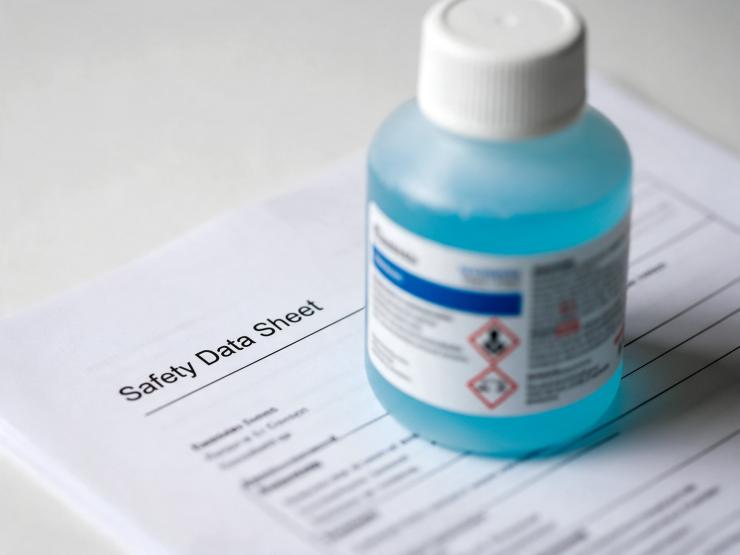
Biocide Product Authorisation is Only Part of the Compliance Picture
ECHA’s latest enforcement findings highlight the need to keep biocidal product labels, packaging and safety information aligned with the approved authorisation.
A biocidal product may hold an authorisation, but the information supplied with it still needs careful attention.
In a news release dated 23 November 2026, ECHA reported that inspectors in 27 countries checked 2,053 authorised biocidal products during 2025. Overall, 24% did not comply with at least one of the requirements inspected. For 4% of products, inspectors considered the non-compliance serious enough to prevent them from being legally made available on the market.
For businesses supplying biocidal products, the findings are a useful prompt to review how approved product information translates into the materials customers actually receive.
What Was Checked During ECHA's Biocide Inspections?
The project examined whether information on labels, packaging, leaflets and the first three sections of safety data sheets matched the approved summary of product characteristics (SPC), which forms part of a biocidal product’s authorisation.
It covered products with national, Union and simplified authorisations. Products available under national transitional measures were excluded.
This scope matters: the results describe the authorised products inspected and should not be treated as a compliance rate for the entire biocides market.
Biocide Inspections Revealed Several Issues
ECHA identified several areas needing improvement:
- Biocidal product labelling: around one in four products had at least one problem with label information required under the Biocidal Products Regulation.
- Hazard information: among products classified as hazardous, 13% had at least one problem with information required under the Classification, Labelling and Packaging Regulation.
- Safety data sheets: 18% of those inspected did not fully match the approved information in the SPC.
The most frequent individual discrepancies concerned user categories and precautionary statements. These details help communicate who can use a product and the precautions needed for its use.
Authorities mainly responded with written or verbal advice and administrative orders. In a small number of cases, they imposed fines or referred cases for criminal proceedings.
Important Considerations for Biocide Compliance
A practical response is to compare the approved SPC with the product information currently in circulation.
Start with the labels and leaflets being supplied, alongside the relevant safety data sheet sections. Pay particular attention to user categories, directions for use, precautionary statements and disposal instructions.
It is also sensible to review document control. When approved product information changes, how does that update reach label artwork, packaging, translations and safety data sheets? Who checks that the revised materials remain consistent before release?
A coordinated review can help identify discrepancies that may be missed when each document is checked separately.
Clarity Matters in Biocide Approved Source Information
The findings also raise a point about the source information itself.
Inspectors assessed the quality of approved SPCs for almost two thirds of the products. Following that assessment, ECHA’s biocides enforcement subgroup recommended improving clarity and consistency, including avoiding ambiguity in user categories, disposal instructions and directions for use.
Where approved wording is unclear, businesses should identify the issue and seek clarification through the appropriate regulatory route. Clear source information supports clearer instructions throughout the supply chain.
Consistency Across Biocidal Product Information
The findings underline the importance of maintaining alignment between a product’s authorisation and its accompanying information.
For businesses managing biocidal products, a focused review of labels, leaflets and safety data sheets is a practical step towards identifying gaps and prioritising corrective action.
If you'd like professional support to ensure regulatory compliance across your portfolio of biocidal products, call or email Blue Frog and speak directly with one of our biocide regulation specialists.
Source: ECHA news release ECHA/NR/26/33, dated 23 November 2026.